Distance
It signals likely duration and fatigue, not the surface under your feet.
 TRAILBOARD.
Trail running shoes
Distance is a clue. Terrain, downhills, time outside and the room your foot needs decide the rest.
Edition 1.1August 2026
The short answer
For a long trail, you do not automatically need more cushioning or deeper lugs. You need grip, stability, protection and volume that still make sense for what the course asks of you for hours.
It signals likely duration and fatigue, not the surface under your feet.
Rock, mud, roots and off-camber ground change grip, precision and protection needs.
Fit, volume and lacing must remain reliable as your foot warms up or swells.
Before looking at a shoe
Use the route, elevation profile and race rules. Look for what will really tax your feet: long descents, mud, runnable sections or isolated terrain.
Hardpack, rock, mud, mixed ground or road sections: choose for what you will meet most.
The longer and steeper the descent, the more heel hold and toe room matter.
Think in hours outside, fatigue and weather, not only listed kilometres.
Rain, heat, night, river crossings and mandatory gear change shoe priorities.
Trade-offs to accept
Every feature gives something and asks for something back. Do not try to tick every box; avoid an obvious weakness for your terrain.
It can preserve comfort over time and repeated impacts.
Too high or soft can reduce precision on unstable ground.It helps on loose, muddy or wet surfaces.
Very aggressive lugs can add little on dry hardpack.Rock guards and a protective sole reduce sharp underfoot impacts.
The shoe may become less flexible or less sensitive.It stabilizes the foot on side slopes and long descents.
An overly tight hold quickly becomes uncomfortable as the foot gains volume.Main families
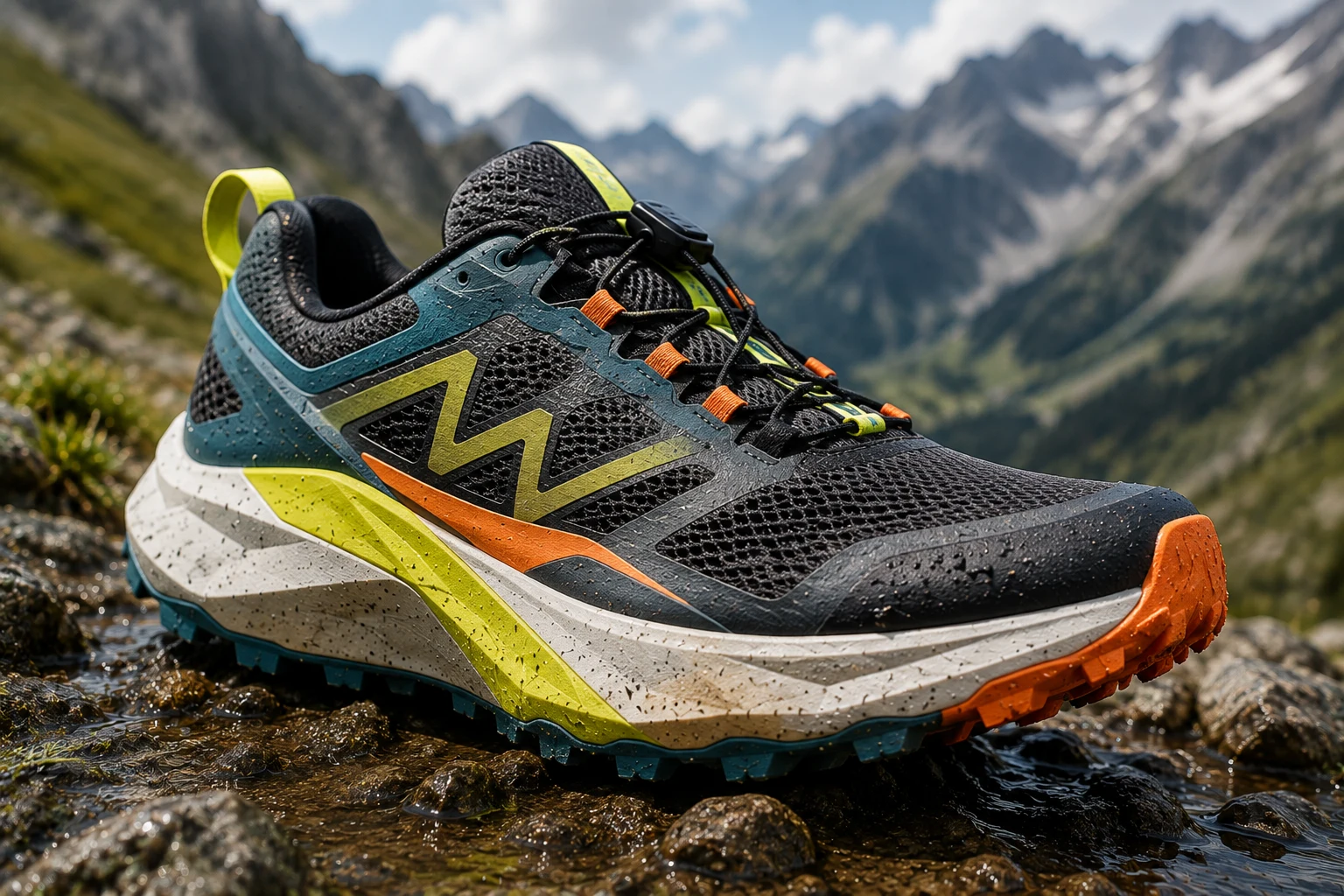
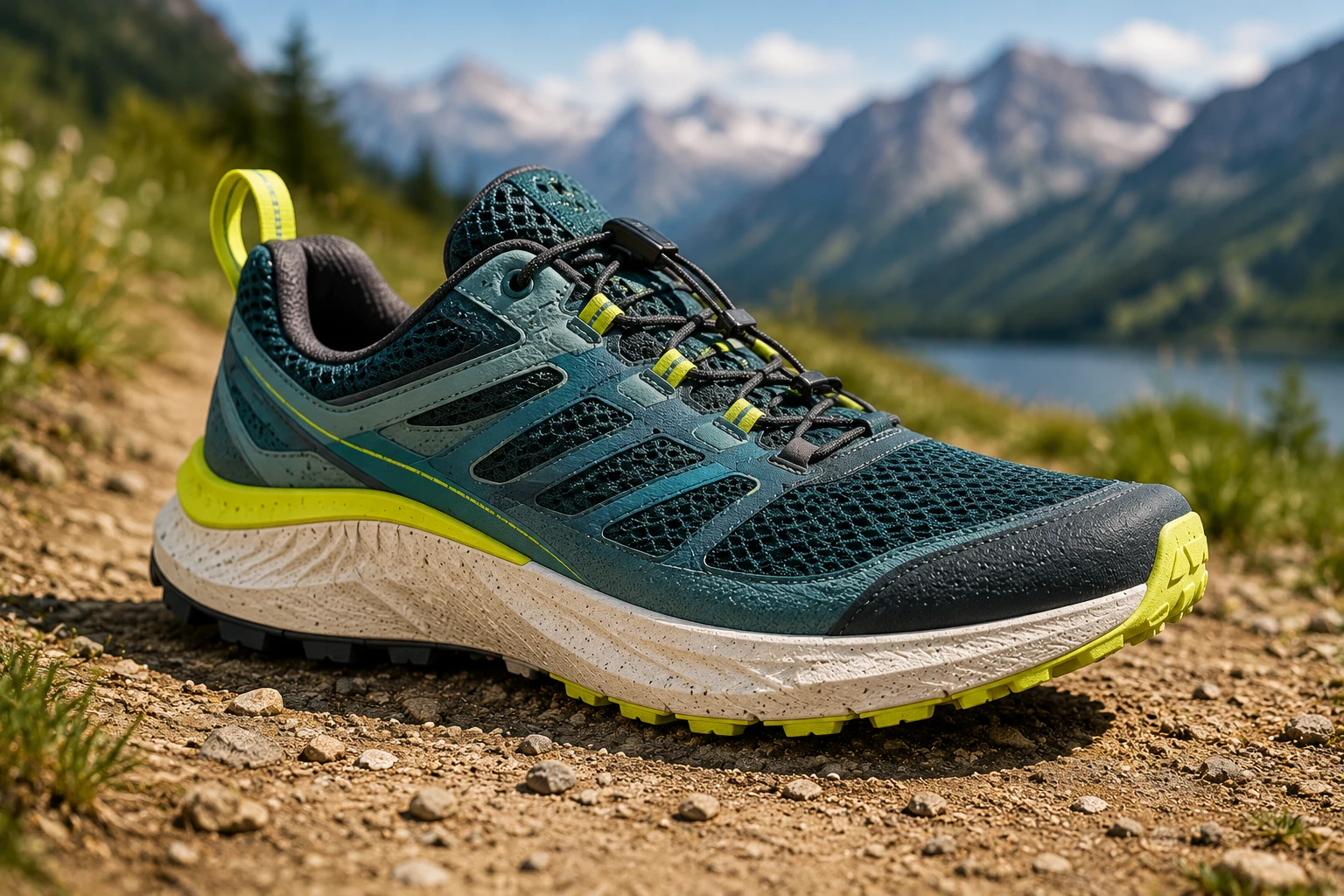
These families describe intended use, not quality. Start with the proportion of road, main surface and technical difficulty, then verify comfort over time. Trailboard is not affiliated with any brand: shoe visuals are illustrative.
 01
01Smoother road transition, moderate lugs and a compromise between road cushioning and traction on compact paths.
Less suited to deep mud, pronounced off-camber ground and highly technical mountains.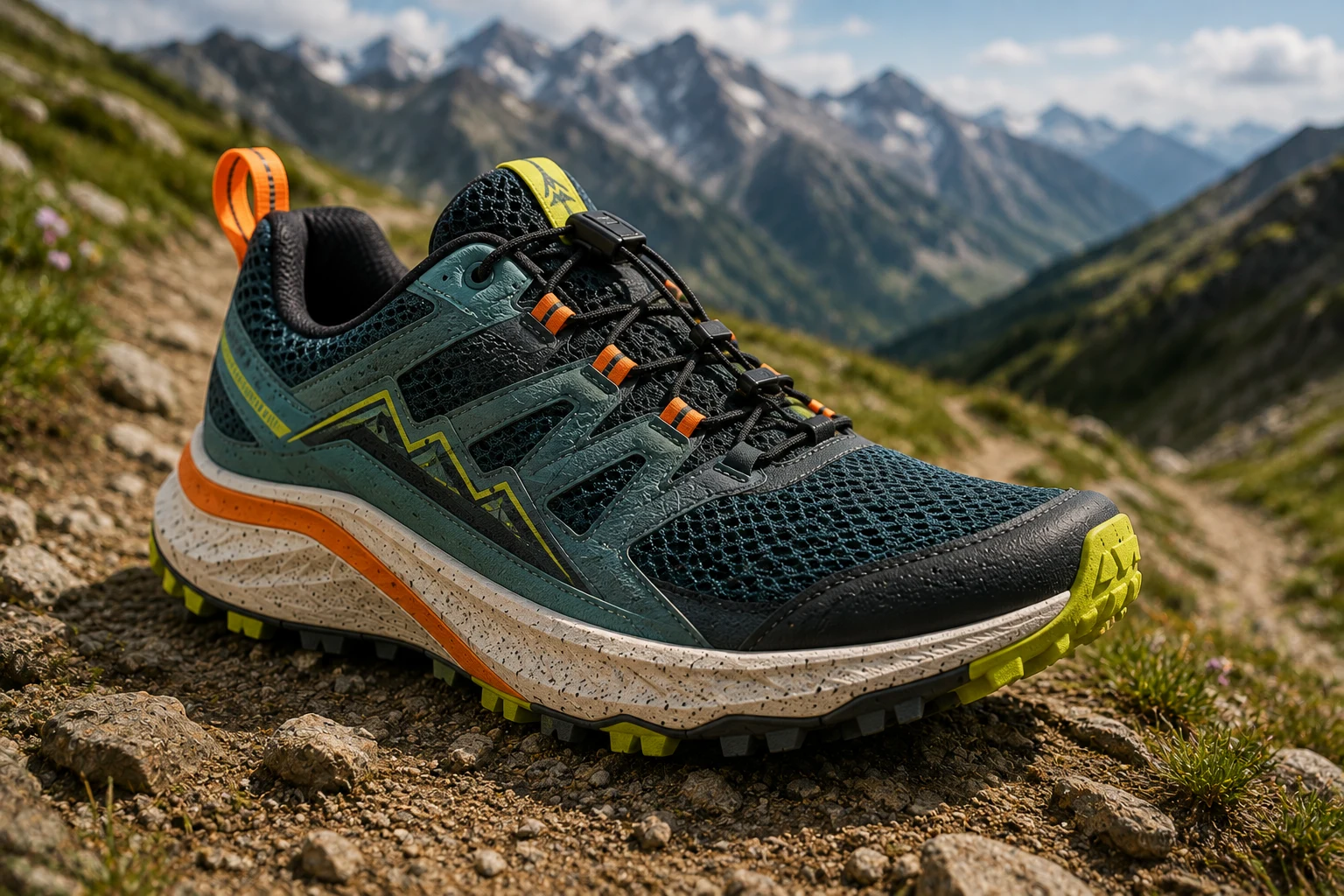 02
02Intermediate grip, measured protection and a balance of stability, comfort and turnover.
Versatile does not mean optimal on highly exposed rock or extremely soft ground.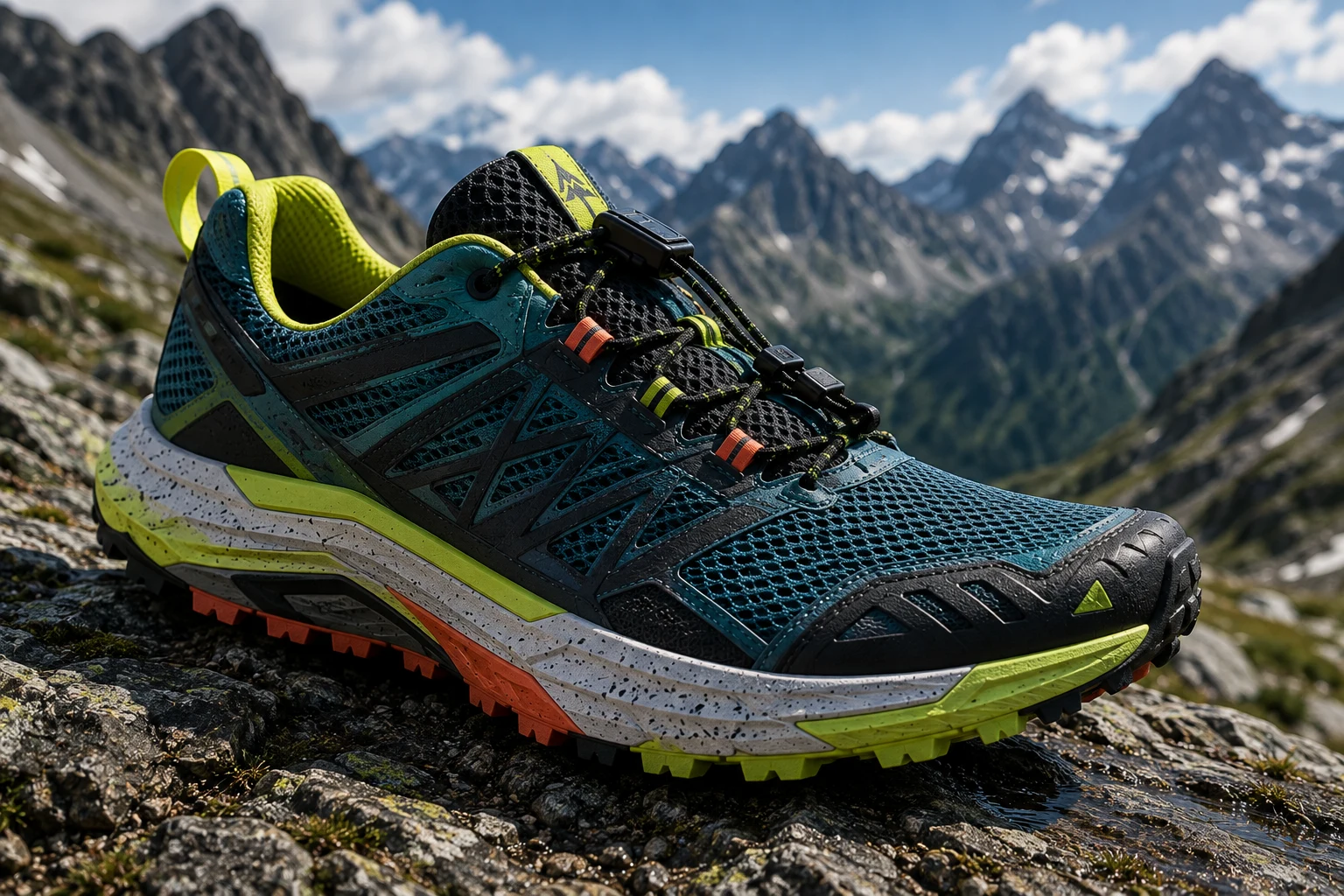 03
03More structured hold, stable platform, underfoot protection and rubber suited to the target surfaces.
It may feel firmer, heavier or less natural on roads and very runnable trails.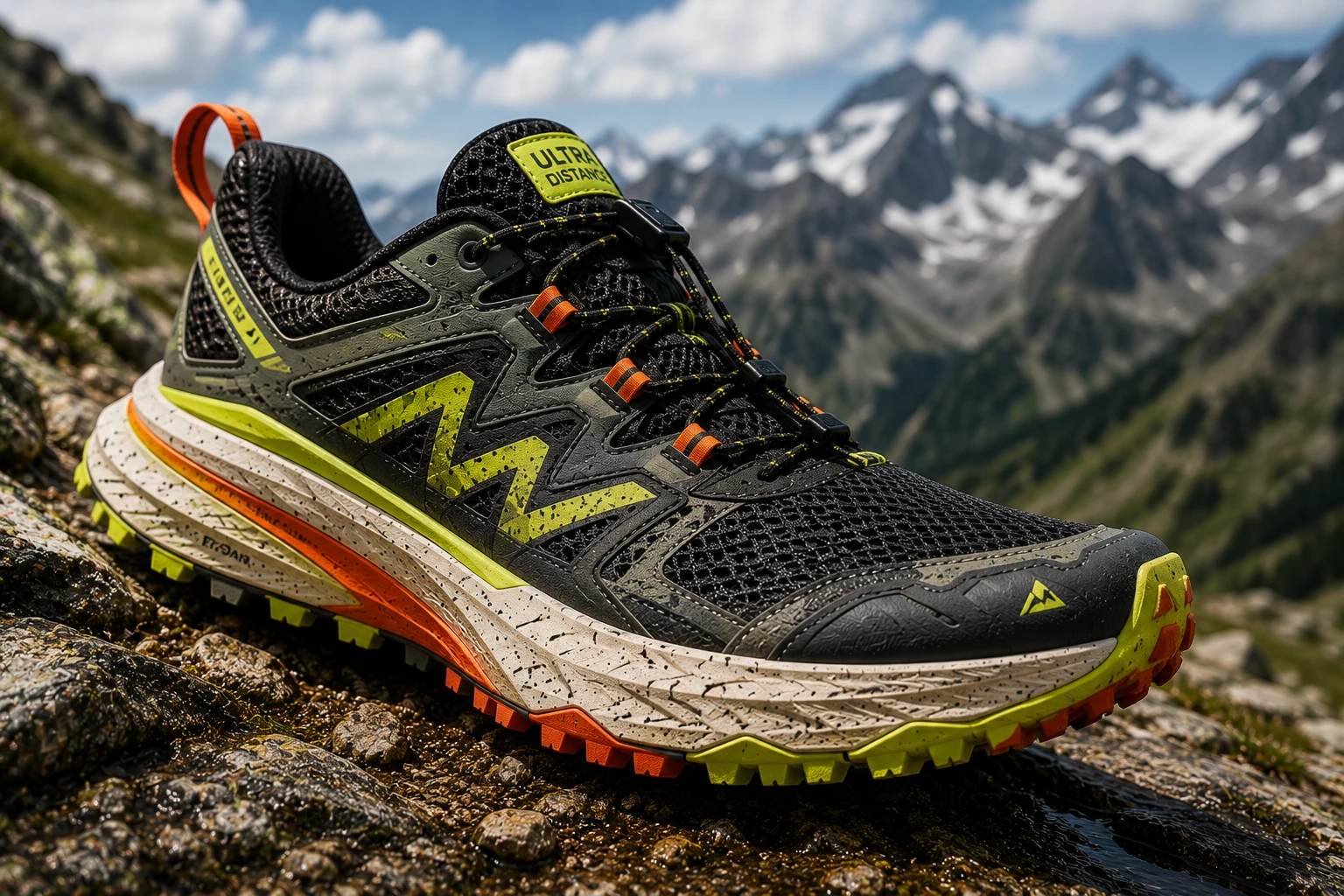 04
04More forgiving volume, durable cushioning, protection and hold designed to limit pressure points as fatigue and swelling build.
A comfortable long-distance shoe still needs grip suited to the actual terrain. What does “Vibram outsole” mean?
Vibram makes several outsoles and rubber compounds used by different brands. The name alone does not describe lug depth or exact use. Megagrip is a compound Vibram positions for grip on wet and dry ground with durability in mind; the full outsole pattern and shoe still matter.
Discover VibramA short paved link is not a problem. Frequent abrasive asphalt, however, places heavy wear on deep lugs, which may wear faster and make the stride less fluid. When road is frequent or dominant, a hybrid is often more coherent than a shoe specialized for soft trails.
Decide with the terrain
These profiles do not name a model. They give you a framework for comparing shoes you can genuinely try and test.
Dry and runnable
Precision still matters, but versatility and natural movement matter more than an extreme outsole.
Validate before deciding
Build wearing time gradually. Look for pressure points, downhill behaviour and what changes after the foot is warm.
Check volume, lacing and early friction without substantial fatigue.
Test the foot placements that resemble the race: rock, mud, side slopes or hardpack.
Observe toes, blisters, stability and whether you can adjust lacing after several hours.
Do not make race day the first test: use shoes already proven on comparable terrain and duration.
The final decision
On race morning, the aim is no longer optimization. It is removing remaining uncertainty.
FAQ
Not because of the “ultra” label alone: 50 km and 150 km do not stress a shoe in the same way. For 50 km, one well-tested pair may often be enough. From 100 to 150 km, time on feet, foot swelling, moisture and progressive midsole fatigue can justify a second pair that has already been tested, staged at an aid station or kept as a backup. It should never be new, and terrain remains the first filter.
It indicates time on feet, but it is not enough. A short rocky race can need more protection than a longer runnable trail.
The key is enough room in front of the toes and around the foot during effort. Try shoes with race socks and validate them on a long run, especially downhill.
Watch outsole wear, loss of hold, tears and changes in feel. There is no universal mileage: terrain and use matter greatly.
Sources and limits
Shoe choice also depends on your history, comfort and personal constraints. This guide helps structure a trial; it does not replace an individual assessment for persistent pain or a health concern. Trailboard is not affiliated with any brand: manufacturer links are provided for reference only.
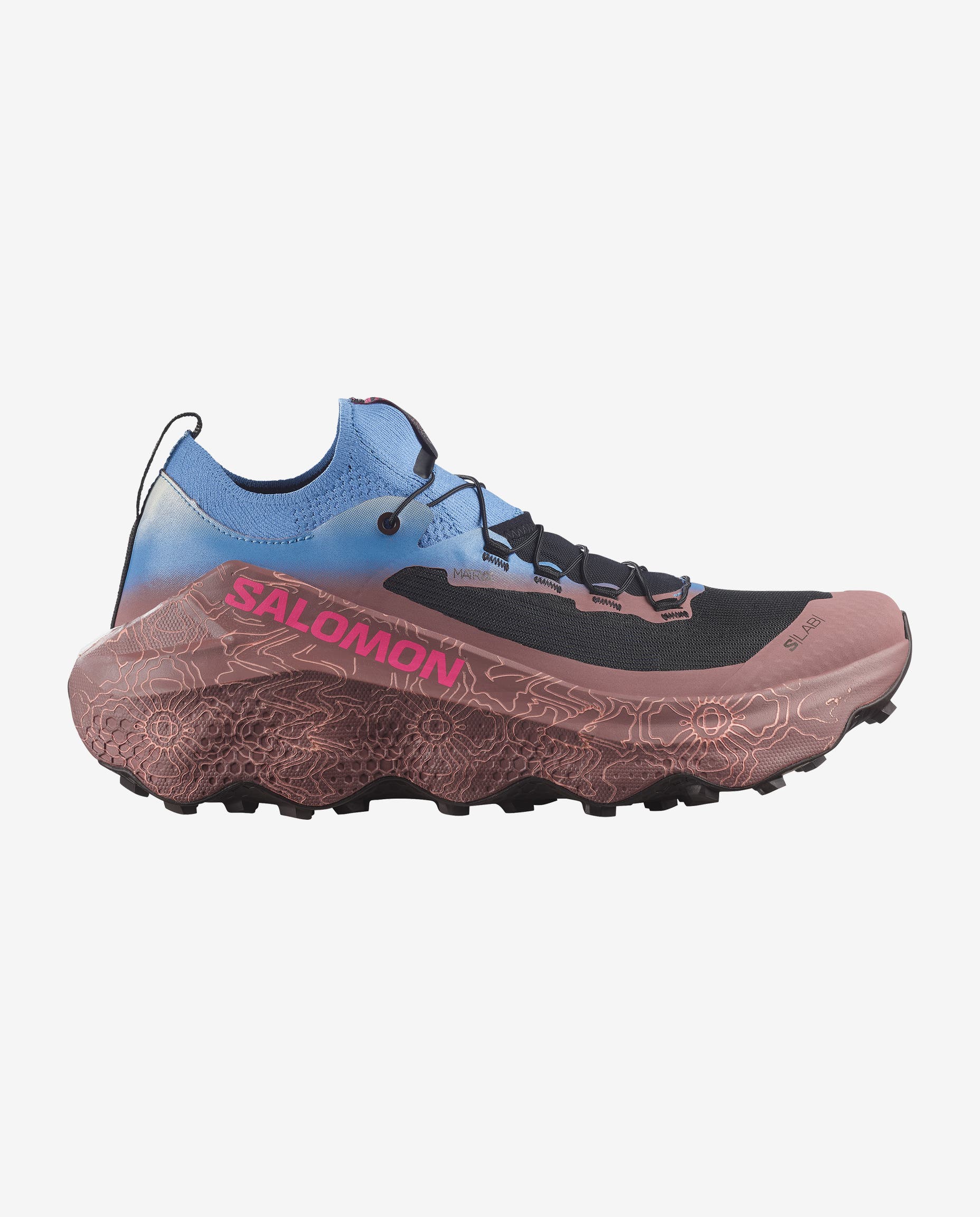
Product-page example: a shoe presented for ultra trail, with mixed terrain, 4 mm lugs, high protection and cushioning.
↗Official presentation of the brand and its high-performance rubber outsoles.
↗Official example of deep lugs designed for soft and muddy surfaces.
↗Chargement…
Member space
Comments
Share your experience, ask a question or add a useful insight for the community.