Sweat rate
Volume approximately lost in a specific context.
 TRAILBOARD.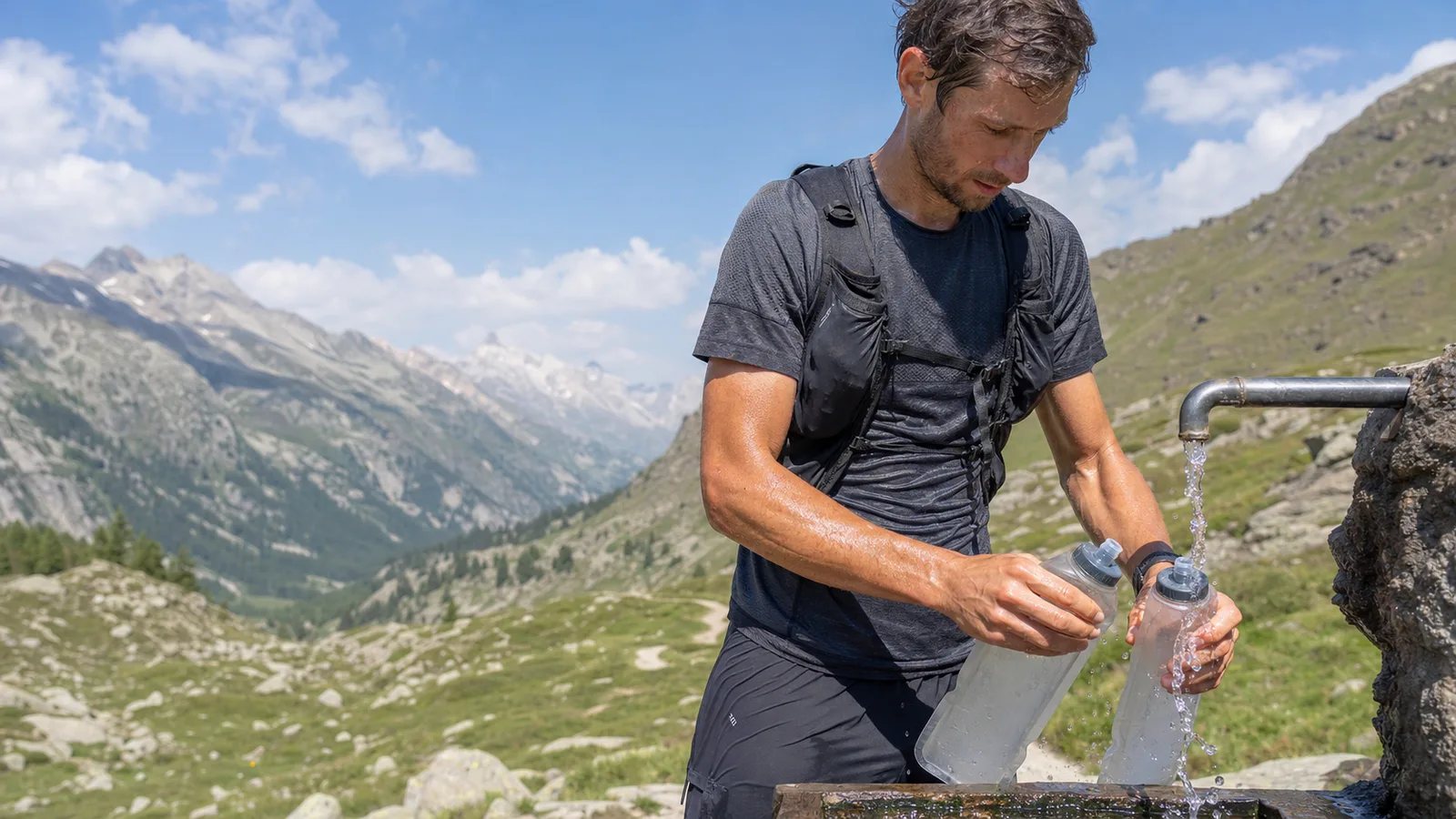
Trail hydration guide
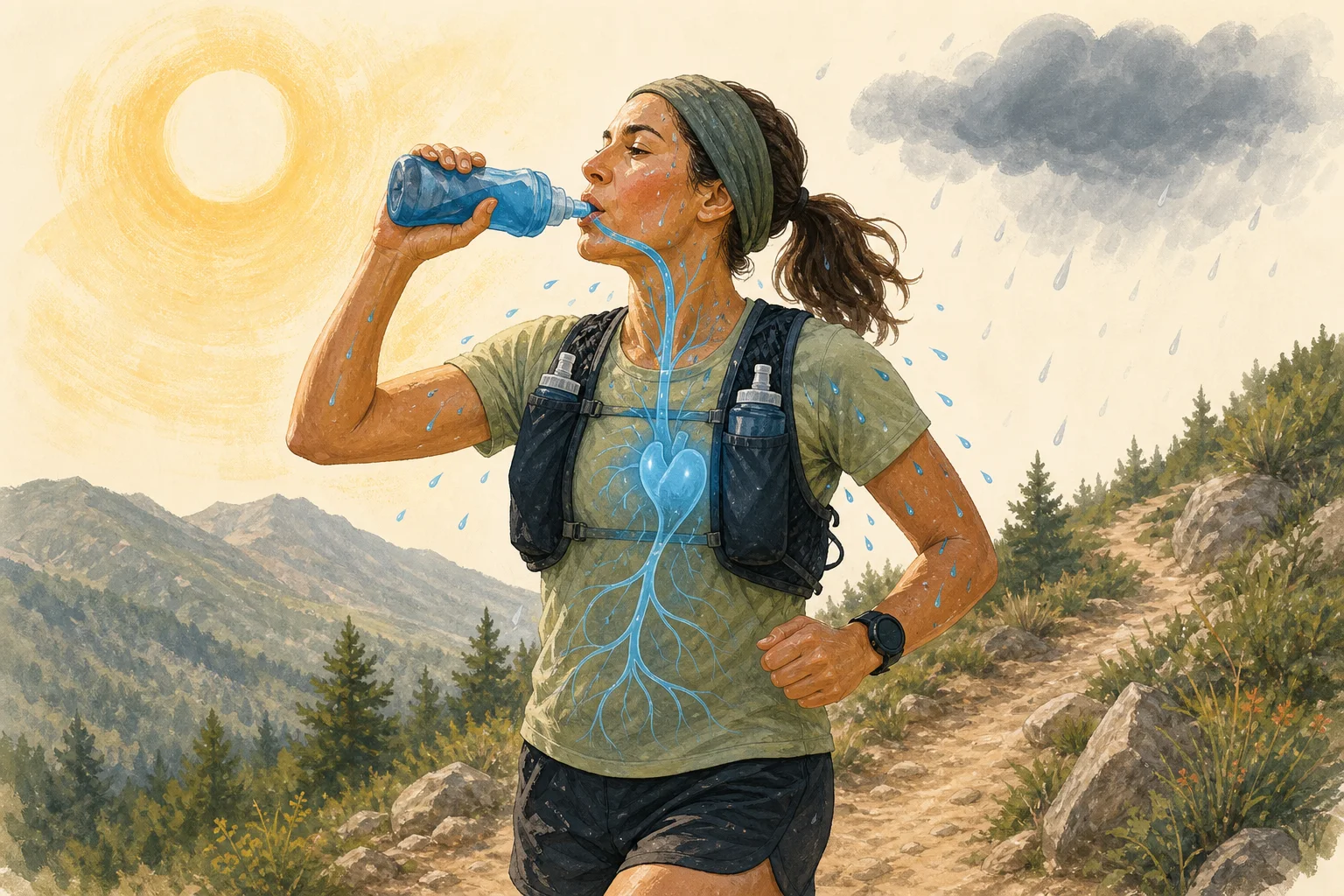
Hydration is not a single ml/h number. It links what you lose, what your sweat contains, what you actually drink and what the course allows you to carry.
Scientific revision 1.0 · 31 July 2026Understand before calculating
Mixing them creates a number that looks precise but is fragile in the field. Trailboard should keep them separate.
Volume approximately lost in a specific context.
Individual concentration, separate from sweat volume.
Amount consumed, which may differ from the plan.
Total from drinks, food and supplements actually consumed.
An estimated need is neither an instruction to drink mechanically nor the volume that must be carried from the start.
Experiment 1
Weighing before and after a comparable run can approximate sweat rate. The result belongs to the test conditions: temperature, intensity, clothing, duration and altitude.
Experiment 2
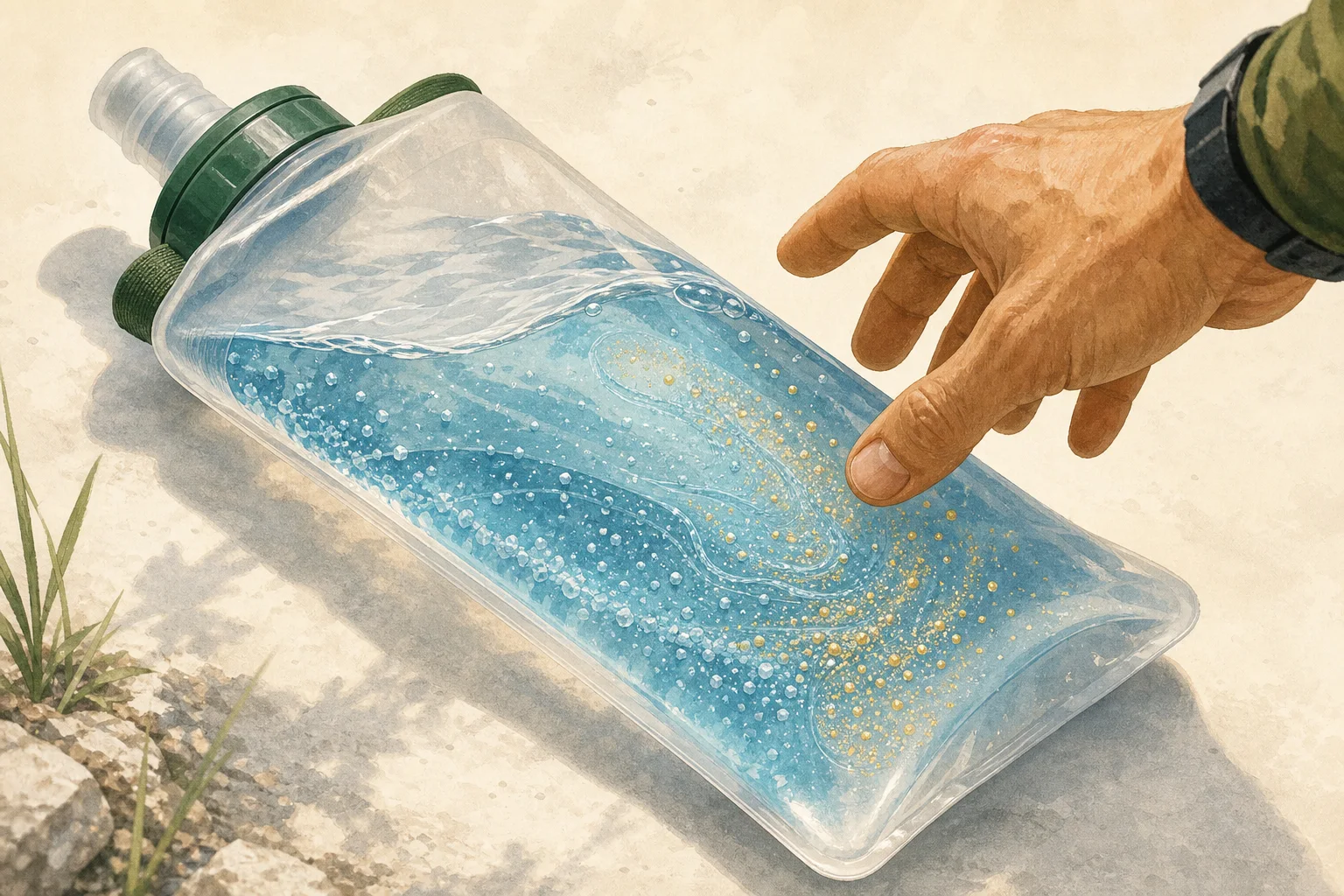
A drink first provides fluid. It may also provide sodium and carbohydrates. Count all three contributions together without treating them as interchangeable.
Experiment 3
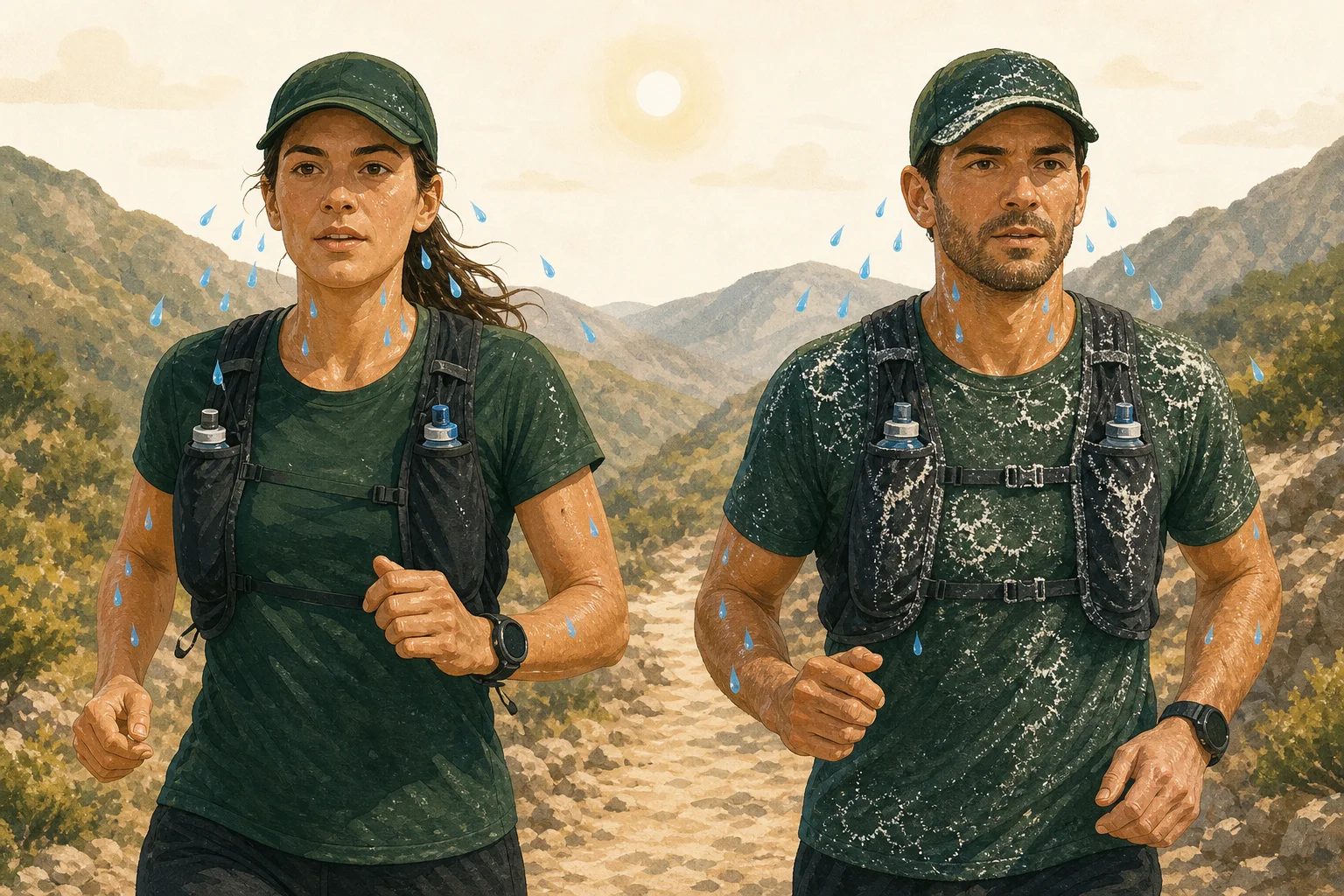
Two runners may lose the same amount of fluid while losing very different amounts of sodium. Sweat rate alone does not reveal its concentration.
Experiment 4
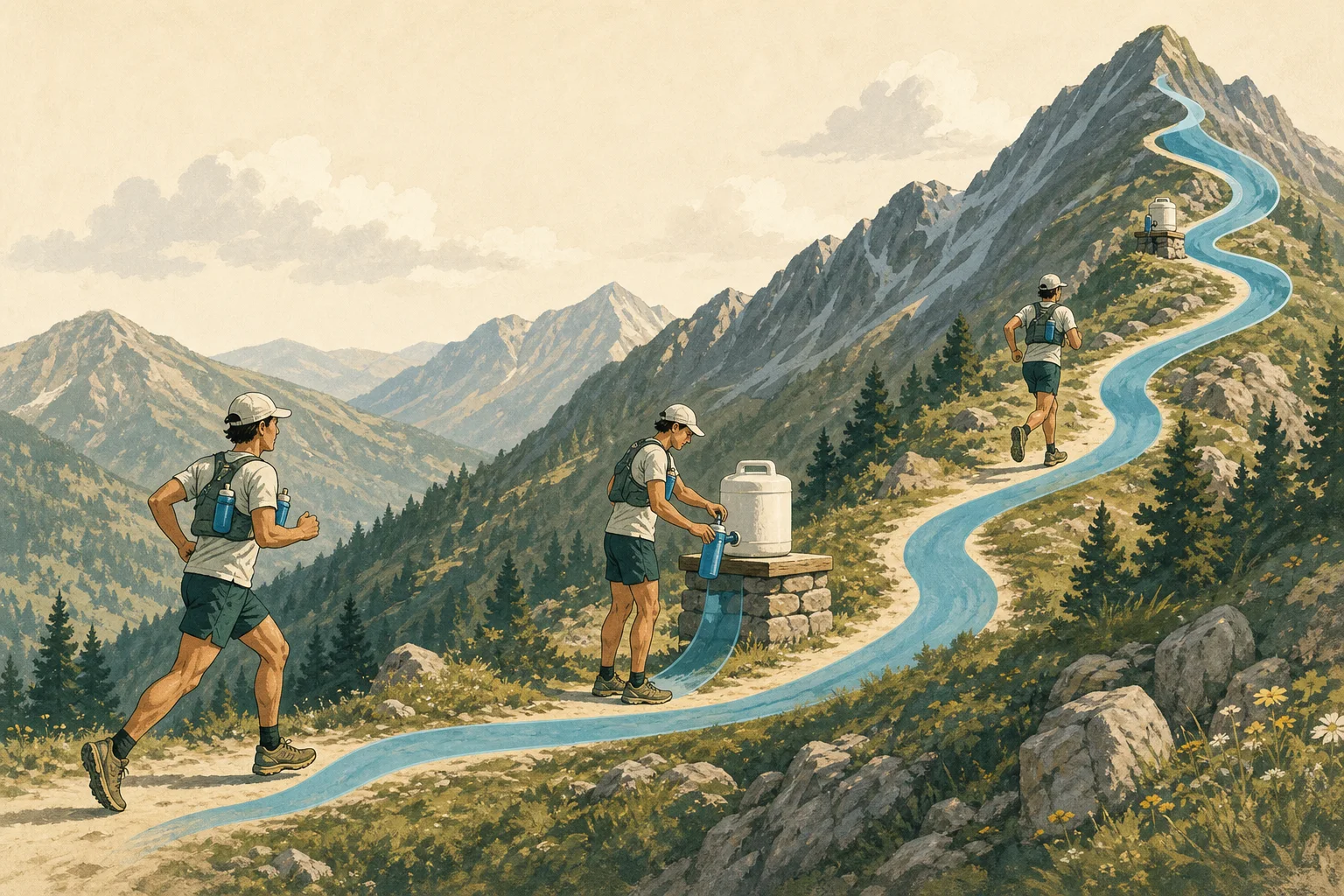
The plan estimates intake for the whole race. Before refilling, consider remaining volume, the next segment, heat and confirmed water at the next point; the bag only needs enough to reach the next reliable water point, with a context-appropriate margin.
Trailboard algorithm
The calculation returns an explainable range, never an instruction to drink blindly. It prioritises a personal measurement when available and makes assumptions visible when it is not.
Calculation example: a measured 0.9 L/h becomes a 540–720 ml/h range; the plan does not try to replace 100% of losses.
Very hot: 550–850 ml/h. Unknown temperature: 400–700 ml/h, with low confidence and an explicit assumption.
If required volume exceeds carrying capacity, Trailboard flags that the segment cannot cover the upper range.
Adapt, do not copy
The same athlete can have several hydration profiles. A value tested in cool weather is not automatically valid for a hot race.
Sweat rate and sweat sodium are not measured.
Keep a cautious range and show assumptions.Fluid intake, body-mass change and conditions are known.
Use the result as a local reference, then repeat it.Thermal demand, water access and tolerance may change.
Retest progressively and recalculate carrying needs by segment.Thirst remains a useful cue within an individual strategy. Forced drinking that produces body-mass gain during exercise signals excessive intake.
Guardrails
Insufficient hydration and excessive fluid intake can both impair performance and create risk. The plan seeks a testable balance, not full replacement of every loss.
Track actual intake, thirst, conditions, aid stations and body-mass change during comparable tests.
Do not mechanically drink beyond losses, treat sodium as insurance or improvise a large dose on race day.
Scientific references
Consensus statements frame underhydration and overdrinking risk. Sweat research explains why one value cannot represent every athlete and condition.
Chargement…
Member space
Comments
Share your experience, ask a question or add a useful insight for the community.